Deep Technical Dive
Industrial OCR Pipeline — Industrial Text Recognition System
Multi-model OCR system for stencil-based industrial text using Quinn OCR, TinyOCR, rule-based validation, and vision-language guidance.
PythonOpenCVQuinn OCRTinyOCRVLMFastAPI
Problem
Industrial stencil text is difficult for standard OCR because characters are often fragmented, distorted, and visually ambiguous (for example B looking like 1+3, S looking like 5, and T resembling 1).
Project Context
- • The project targets industrial labels/components where stencil fonts and discontinuous characters are common.
- • It was designed as a production-friendly OCR system rather than a benchmark-only academic prototype.
Why It Was Hard
- • Stencil letters are frequently disconnected into multiple components.
- • Industrial noise, blur, and shape artifacts increase OCR ambiguity.
- • Single-model OCR predictions are brittle under these distortions.
Solution
Implemented a hybrid OCR pipeline where Quinn OCR and TinyOCR run in parallel, outputs are aggregated and validated through logic rules, and a vision-language model provides contextual guidance for ambiguous characters.
System Architecture
Diagram space is ready — replace with visuals later if needed.
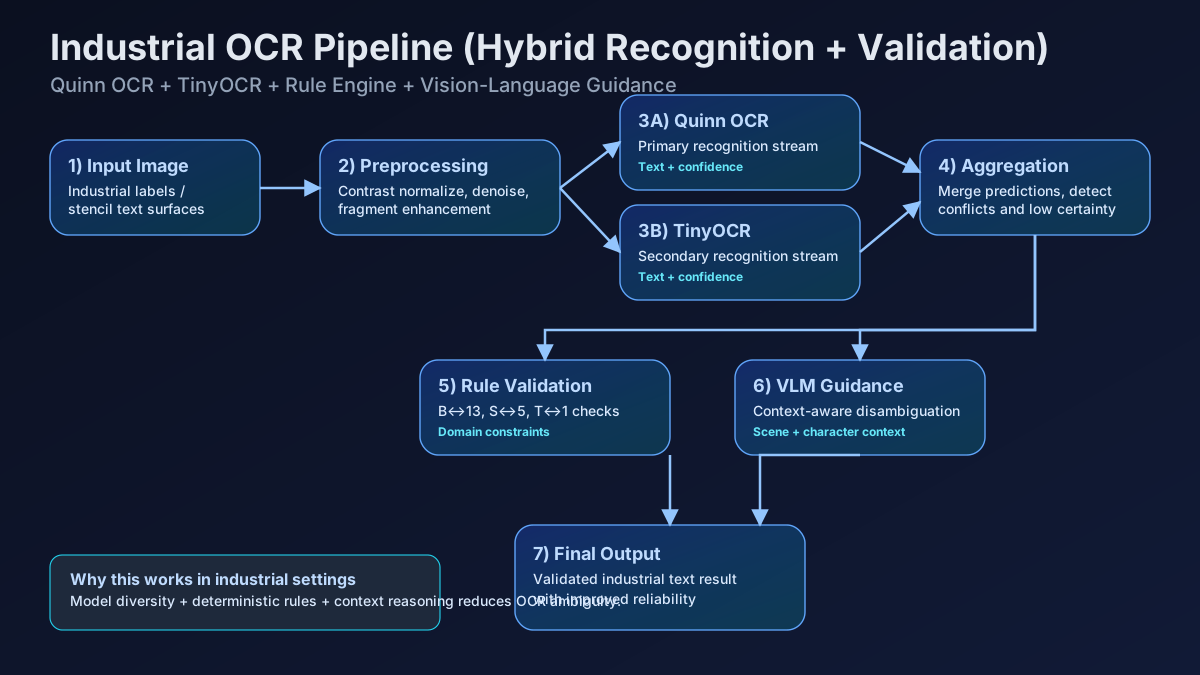
- • Industrial image input
- • Image preprocessing and enhancement
- • Parallel OCR stage: Quinn OCR + TinyOCR
- • Prediction aggregation and conflict detection
- • Logic-based validation rules for character correction
- • Vision-language model guidance for ambiguity resolution
- • Final recognized text output
Implementation
- • Built multi-model OCR orchestration layer to execute Quinn OCR and TinyOCR simultaneously.
- • Added industrial preprocessing routines for noisy/fragmented stencil patterns.
- • Created logic-confirmation rules to resolve frequent confusion pairs such as B/13, S/5, and T/1.
- • Integrated VLM as a contextual verifier for uncertain recognitions.
- • Exposed the production OCR endpoint through API for operational use.
Results
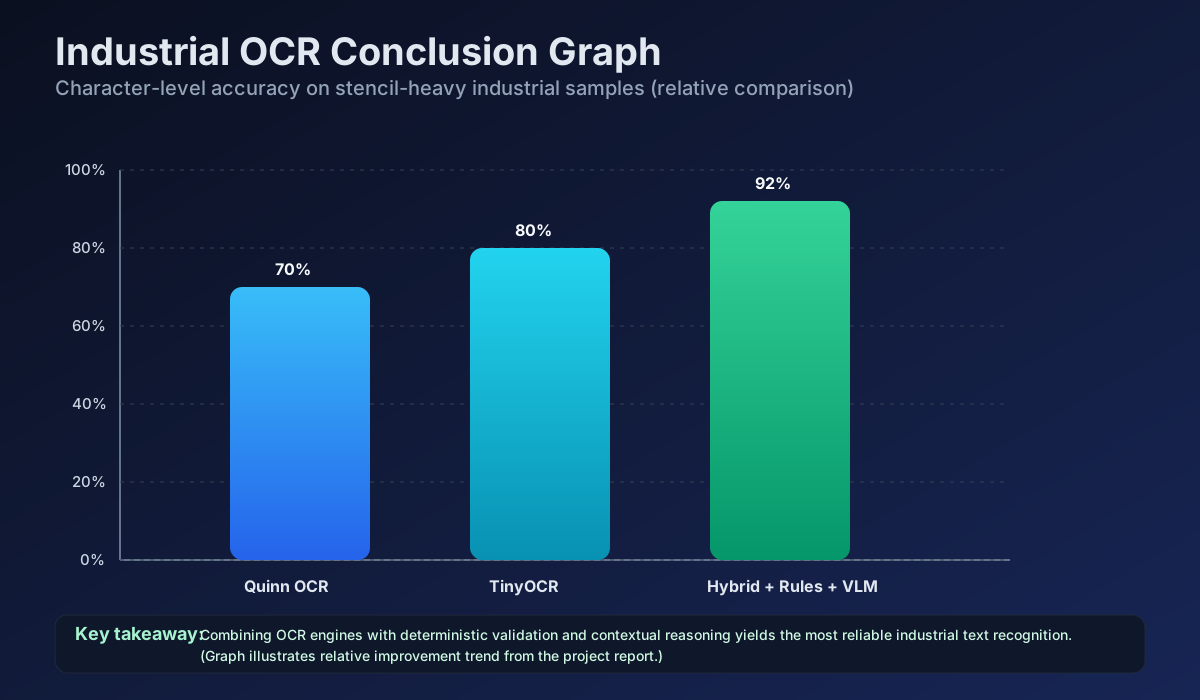
- • Significantly improved reliability versus single-engine OCR baselines.
- • Better recognition of fragmented stencil characters in industrial labels.
- • Reduced confusion between visually similar alphanumeric symbols.
- • Delivered practical performance for equipment markings and industrial text surfaces.
Lessons Learned
- • Combining multiple OCR engines improves robustness in non-standard typography.
- • Stencil-based industrial text requires specialized adaptation and fine-tuning.
- • Rule-based confirmation is highly effective for recurrent ambiguity patterns.
- • Vision-language guidance can materially improve final recognition confidence.
Future Improvements
- • Expand language and symbol coverage for broader industrial deployment.
- • Add adaptive confidence calibration by environment and device type.
- • Introduce active-learning loops from operator corrections.
- • Integrate real-time dashboard for error trend monitoring.